Why Your Map Pin Isn’t Turning Into Actual Phone Calls for Your Shop
You know the feeling. You log into your dashboard, and the graphs look beautiful. The blue line representing “Impressions” is trending upward, and your google business profile seo efforts seem to be paying off on paper. You might even be sitting comfortably in the “Local Pack” for your primary keywords. But then you look at your phone, and it’s silent. You check your lead forms, and there’s nothing but spam. It feels like a ghost town.
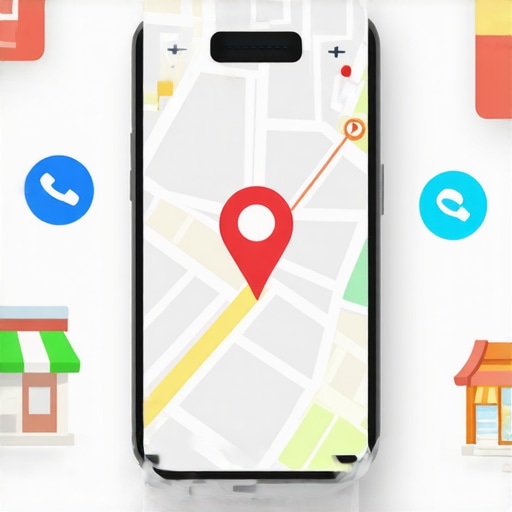
This is what I call the “Ghost Town” syndrome. It is the frustrating reality for thousands of small business owners who have achieved visibility but failed to achieve conversion. In my years as a Google Business Profile Product Expert, I’ve seen this time and again: a business ranks #1, yet the owner is struggling to make payroll. The hard truth is that a map pin is just a signpost; it is not a salesperson. If your pin isn’t ringing the bell, you are suffering from The ROI Gap.
Recent data points from the SEO community, including discussions on Reddit, suggest that calls are generally down across the board for many Google Business Profiles (GBPs). This is largely due to Google’s aggressive rollout of AI tools and “Zero-Click” features. However, while the macro-trend is downward, your shop should still see leads trickling in. If the tap has completely dried up, the problem isn’t just “the algorithm” – it’s your profile’s inability to bridge the gap between being seen and being trusted.
Why Ranking #1 Doesn’t Always Mean More Leads
The first thing we need to address in your google business profile seo strategy is the Proximity and Relevance Trap. Many business owners use google maps ranking service tools to check their rankings from their own office chair. They see themselves at #1 and assume everyone in the city sees the same thing. They don’t.
Proximity is a massive ranking factor. You might rank #1 for someone standing 50 feet away from your shop, but your “visibility radius” might only extend a few miles – or even a few blocks in a dense urban area. If your ranking drops to #10 as soon as someone moves two miles away, your “high ranking” is functionally useless for the majority of your target market.
Furthermore, research from Digital Harvest suggests that profiles often rank for “low-volume or irrelevant keywords.” You might be ranking #1 for “best blue widgets with silver trim,” but if nobody is searching for that, your phone won’t ring. If you are ranking for terms that don’t have commercial intent, you’re winning a race that has no prize. This is often the result of a fundamental Audit Mistake where the business fails to align its profile with what customers actually type into the search bar when they are ready to buy.
Local SEO isn’t just about being “at the top.” It’s about being at the top for the right person, at the right time, in the right location. If your visibility is restricted to a tiny radius or irrelevant terms, your map pin is essentially invisible to the people who actually want to spend money.
Local SEO is Infrastructure, Not Just Marketing
I often cite Rashid Rehman, who famously said, “Local SEO isn’t marketing. It’s infrastructure.” This is a profound shift in how you should view your google business profile seo. Marketing is about getting attention; infrastructure is about supporting the weight of that attention. If your profile is “leaky” – meaning it has missing phone trust signals, unclear service descriptions, or outdated information – it cannot support the “weight” of a potential customer.
When a user sees your map pin, they are performing a lightning-fast mental audit. They are looking for reasons to trust you. If they see generic stock photos of people in headsets or clinical office buildings that don’t match your actual location, that trust evaporates instantly. We have found that swapping generic photos for real team shots is one of the most effective ways to build the immediate trust necessary to make a user click “Call.”
Think of your GBP as the digital storefront of your shop. If the windows are dirty (blurry photos), the sign is missing (no clear service list), and the door is locked (incorrect hours), people will keep walking – or in this case, keep scrolling. This is why google maps optimization is so critical. You need to ensure every “trust signal” is firing. Does your profile show you are an expert? Does it show you are active? Does it show you are real? One small change in how you present your team or your physical space can lead to a significant jump in call volume because you’ve finally fixed the infrastructure.
How AI Overviews and Gemini are Changing the Call-to-Action
As we move into 2026, the landscape of google business profile optimization is shifting under our feet. Google’s AI Overviews (formerly SGE) and the integration of Gemini into Search and Maps are creating a “Zero-Click” reality. In the past, a user would search, see your profile, and click. Today, AI is now summarizing business information directly in the search results.
The AI might say, “Based on reviews, Shop A is great for emergency repairs, but Shop B is better for long-term maintenance.” If the AI gives the user everything they need to know, they might never even click on your profile. This is why your phone calls might be down even if your rankings are up. The AI is acting as a gatekeeper.
To survive this shift, you must ensure your shop is cited in these AI-generated answers. This requires a sophisticated use of local seo tools to monitor how your business is being mentioned across the web. The AI pulls from your website, your reviews, and third-party directories. If your data is inconsistent or your service descriptions are vague, the AI will pass you over for a competitor who has a more “readable” digital footprint.
You need to optimize for “intent-based” summaries. Instead of just trying to rank for “Plumber,” you need to be the business that Gemini recommends when someone asks, “Who is the most reliable plumber for burst pipes in the downtown area?” This level of optimization goes beyond simple keyword stuffing; it requires a deep alignment between your GBP and your website’s service pages.
5 Moves to Turn Map Views into Actual Customers
If you’re ready to stop staring at empty graphs and start answering the phone, here are five practical moves to turn maps traffic into actual phone calls.
1. Primary Category Alignment
Many businesses choose a primary category that is too broad. If you are a “Personal Injury Lawyer,” don’t just set your category to “Lawyer.” You will end up ranking for people looking for divorce or real estate law, and they won’t call you when they see your profile is all about car accidents. Ensure your primary category is the tightest possible fit for your highest-revenue service.
2. Review Quality over Quantity
Stop chasing a thousand 5-star reviews with no text. Google’s algorithm and AI tools are looking for “Review Tactic” insights – specific keywords inside the reviews. A review that says “Great service” is worth much less than a review that says “John fixed my emergency water heater leak in under an hour.” Encourage your customers to mention the specific service they received. This helps you rank for high-intent queries.
3. Service Menu Depth
Don’t just list “Plumbing” in your services. Use the “Services” section of your GBP to list every specific task you perform. List “Emergency Water Heater Repair,” “Clogged Toilet Fix,” and “Sump Pump Installation.” This granular detail helps Google’s AI understand exactly what you do, making you more likely to appear in specific, high-intent searches. If you find your edit stays pending when trying to update these, it’s often a sign of a trust issue with your account authority.
4. The “Near Me” Sync
Your Google Business Profile does not exist in a vacuum. It must be synced with your website. Ensure your website has dedicated service pages that align with high-intent “near me” queries. If your GBP says you offer “AC Repair,” you should have a page on your site titled “AC Repair in [Your City]” with local landmarks and geo-signals mentioned. This creates a “relevance loop” that Google loves.
5. NAP Consistency and Trust Signals
Name, Address, and Phone number (NAP) consistency is the bedrock of local SEO. If your phone number is different on your website than it is on your GBP, or if your address has a different suite number on Yelp, Google will lose confidence in your data. Inconsistency makes you invisible. Use professional google business profile seo tools to audit your citations across the web and ensure everything is identical.
Closing the Gap: Your Next Steps
At the end of the day, a map pin is only as good as the leads it generates. If you are ranking but not converting, you are essentially paying for a billboard in the middle of the desert. You have the visibility, but you lack the conversion-optimized infrastructure to turn a searcher into a caller.
The 2026 landscape demands more than just basic optimization. It requires a holistic approach that considers AI summaries, user psychology, and technical precision. Don’t let your business be a victim of the “ROI Gap.” By focusing on trust signals, specific service depth, and aligning your profile with high-intent queries, you can turn your Google Business Profile into the lead-generation machine it was meant to be.
If you are struggling to see results, it may be time for a professional rank google business profile audit. Stop guessing and start using data-driven strategies to dominate your local market. Your shop deserves to be more than just a pin on a map – it deserves to be the first call your customers make.