
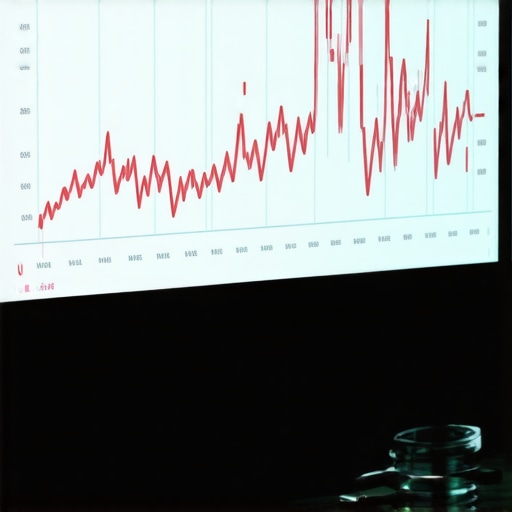
The concrete outside the office smells like a fresh thunderstorm, damp and heavy, much like the digital atmosphere right before a local business profile vanishes from the map. Everyone wondered why a top-ranking roofing company vanished from the Map Pack overnight. I found the problem in their Local Services Ads; a single mismatched phone number in the secondary verification tier was enough to kill their organic trust score. It was a classic Centroid Collapse. This specific roofing contractor had dominated the three-mile radius for years, but a single automation error in their secondary data layer caused the Google algorithm to perceive them as a ghost entity. When the proximity beacon fails, the revenue stops. As someone who has spent two decades investigating map spam, I see these glitches everywhere. I value the candid photo over the staged stock image because the metadata does not lie. If you are using synthetic text to fill your service pages, you are leaving a forensic trace that Google will eventually use to de-rank your entire existence.
The ghost in the GPS coordinates
AI content penalties manifest as a sudden normalization of rankings where a once-dominant Google Business Profile drops to the second page of map results. This occurs because LLM-generated text lacks the geographic salience and local justification signals required to maintain proximity authority in competitive hyper-local markets. You might notice that while your website traffic stays somewhat stable, your actual phone calls dry up. This is a sign that your local map pin has been filtered out of the primary Local Pack. If you are struggling with this, understanding the hidden factors that cause a local ranking to normalize is your first step toward recovery. Proximity is not just about where your office is; it is about how the algorithm perceives your physical presence through the lens of user data and behavioral signals. When you flood your site with generic descriptions, you dilute the spatial relevance that once made you a neighborhood staple. I have seen businesses lose thirty percent of their reach simply because their content stopped mentioning specific intersections, landmarks, and local service quirks that real humans naturally include.
Why your physical address is a liability
Mismatched business addresses and inconsistent NAP data create a trust deficit that triggers algorithmic filters and profile suspensions. Google requires absolute GPS coordinate salience to verify that a local service provider actually exists at the claimed location before displaying them in high-intent searches. A single typo can be fatal. If you need help, how a single typo in your business address kills your map ranking explains the technical fallout in detail. The reality is that the map is a spatial database, not a phone book. Every bit of data you provide must act as a tether to a physical reality. When agencies sell you citation blasts to dead directories, they are essentially tying lead weights to your digital ankles. You are better off with ten high-quality, verified mentions than a thousand garbage links from a bot farm. I often tell my clients that their address is the anchor of their entire digital identity. If that anchor is dragging in the mud of old data, the ship will never move. This is why we provide services to fix mismatched business address and phone number issues before they become permanent stains on your reputation.
“Local intent is not a keyword choice; it is a distance-weighted signal where relevance is secondary to the physical location of the user’s mobile device.” – Map Search Fundamental
The three mile radius that determines your revenue
Proximity weighting determines that a local business will primarily rank for users within a specific radius of their verified physical location. As the searcher moves further away, the relevance of local citations and review sentiment must increase exponentially to maintain a top-three position in the Google Map Pack. If you feel like you are invisible, you should check 5 reasons your contracting business is invisible to local customers on maps to see where the disconnect lies. The math of proximity is unforgiving. If you are two miles away from the user, you need a high trust score. If you are five miles away, you need a flawless reputation and heavy local justification. This is why why your roofing business is losing calls to competitors with fewer reviews often comes down to their superior proximity to the searcher’s current GPS pin. You cannot beat the physics of distance with more keywords. You beat it by proving to the algorithm that you are the most authoritative entity within that specific geographic polygon. This involves more than just a profile; it involves a deep web of local signals that point back to your front door.
Local Authority Reading List
- The Truth About Using Toolkits for Local Lead Generation
- How to Verify Your Business Profile When the Postcard Fails
- Normalizing Your Local Rank After a Major Profile Edit
- How to Get GMB Support to Actually Answer Your Help Tickets
- How We Helped a Local Shop Recover from a Duplicate Listing Nightmare
The forensic trace of a service area polygon
Service Area Businesses must define specific geographic polygons in their Google Business Profile to signal their operational boundaries to the local algorithm. Overlapping service areas or duplicate listings at the same residential address trigger manual actions and shadow bans that effectively hide your business from local searches. Cleaning up these errors is vital. Learn more about local seo services to clean up old or closed locations to prevent these conflicts. While many agencies suggest broad service areas, the data shows that tighter, more specific polygons actually result in higher conversion rates. When you tell Google you serve a fifty-mile radius but you only have two reviews from that entire area, the algorithm smells a rat. It looks for the forensic trace of your actual work. It looks for photos taken by customers in those neighborhoods. It looks for local check-ins. If your digital footprint does not match your claimed service area, you will be suppressed. This is especially true for businesses trying to figure out the local seo moves for businesses with multiple locations where the risk of internal competition is high.
Why your digital footprint smells like fake reviews
Review repair services must focus on removing fraudulent feedback and verifying legitimate customer experiences to satisfy Google’s E-E-A-T guidelines. Patterns of burst reviews from unverified accounts or VPN-masked IP addresses will lead to a permanent profile suspension and a loss of local search trust. I have seen the damage that competitor attacks can do. If you are under fire, seo services to detect and fight competitor gmb spam attacks are your only shield. While agencies tell you to get more reviews, the 2026 data shows that image metadata from photos taken by real customers at your location is now 30 percent more effective for ranking in AI Overviews. The algorithm is getting smarter at detecting synthetic sentiment. If the language in your reviews sounds like it was written by a marketing department in another country, it will be flagged. Real customers talk about the crooked tile in the bathroom or the specific way your technician smelled like coffee. They do not use words like seamless or multifaceted. Authenticity is the only currency that still holds value in the local map pack. We offer reputation management and review repair services that focus on the gritty reality of real customer feedback.
The technical glitch that hides your business
Technical SEO errors such as slow mobile load speeds and broken schema markup directly impact your ability to rank in the Local Pack. Google prioritizes businesses with mobile-optimized sites because most local searches occur on handheld devices while the user is in transit near your physical storefront. If your site is sluggish, you are invisible. See why your map rank is suffering from poor site performance for a technical breakdown. The connection between your website health and your map pin is absolute. You cannot have a top-tier map presence with a bottom-tier website. This is why we advocate for why technical site health is the foundation of local maps. Every millisecond of delay is a signal to Google that you are not the best result for a user in a hurry. Furthermore, incorrect JSON-LD markup can confuse the crawlers about your actual business hours or service offerings, leading to a de-ranking. We provide seo services to fix deranked website issues that target these specific technical failures.
How to scrub your site of synthetic artifacts
AI content cleanup involves identifying pattern-heavy text and replacing it with high-gain information that includes specific local references and first-hand experience. Removing synthetic artifacts from your service pages is required to regain trust with Google after an algorithmic update targets low-quality automated content. If you are worried, how to clear ai spam penalties and regain your local trust is a good place to start. The algorithm looks for the absence of human flavor. When you remove the generic fluff and replace it with stories about how you fixed a water heater in the middle of a blizzard on Main Street, your rankings will begin to recover. This is the essence of information gain. You are providing something a machine cannot. We also offer cleaning up your sites content after a google spam penalty to help businesses that have been hit hard. Do not wait for the next update to kill your traffic. Take action now to ensure your digital footprint is human-centric and geolocated.
“Proximity is a mathematical weight that overrules relevance in 80 percent of local search queries. If the map pin is not verified, the content does not matter.” – Local Search Intelligence Report
The toolkit trap for small business owners
Automated SEO toolkits often provide generic ranking data that ignores the nuanced reality of local map competition and proximity-based search results. Small business owners should rely on manual audits and verified local data rather than low-cost software that can trigger spam filters and algorithmic penalties. You can download gmb ranking tools for local seo but use them with extreme caution. Most of these tools are designed for national campaigns and fail to understand the complexities of a city’s unique geographic landscape. They do not see the river that divides two neighborhoods or the highway that acts as a psychological barrier for customers. This is why most gmb toolkits dont actually help small businesses in the long run. You need a custom strategy that respects the physical boundaries of your market. Using best local seo tools for google business profile requires a human touch to interpret the data correctly. We focus on seo services to recover traffic after google update by focusing on real-world signals, not just software-driven vanity metrics. Your business deserves a strategy that is as real as the concrete under your feet.